How Lysozyme Works on Bacterial Cell Walls
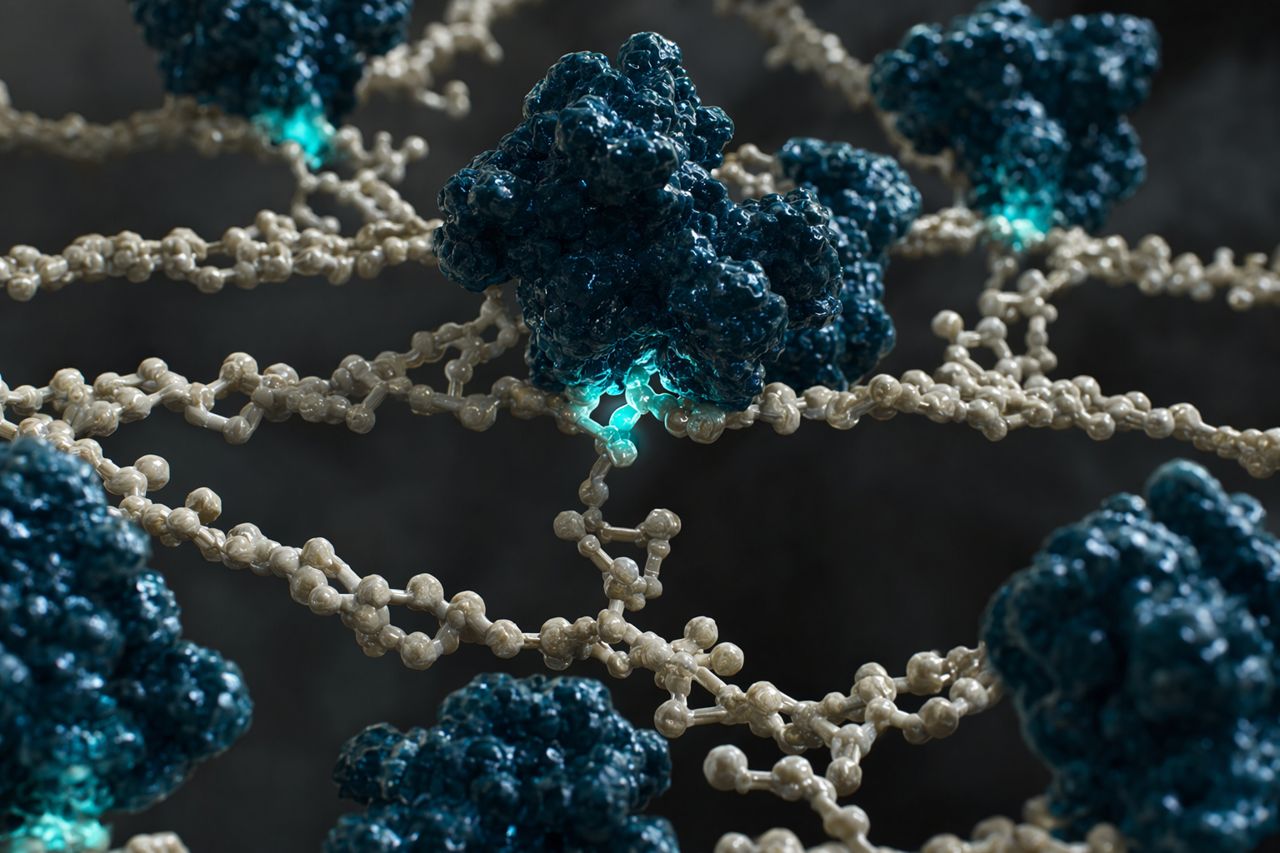
Lysozyme is a defensive enzyme that targets one of the most mechanically important structures in bacteria: the peptidoglycan cell wall. For formulation scientists and application teams, its value comes from a clear and selective mechanism. Lysozyme weakens bacterial wall architecture by cleaving specific sugar linkages in peptidoglycan, making susceptible cells less able to resist internal osmotic pressure.
That mechanism is especially relevant for gram-positive bacteria, where peptidoglycan is thick and more exposed. In gram-negative bacteria, the outer membrane can limit lysozyme access unless the membrane has already been disrupted by formulation conditions, processing, or compatible co-factors.

Murovia approaches Lysozyme as a functional ingredient and processing aid: specified for practical performance, handled for consistency, and discussed in the language of scale-up, documentation, and application fit.
The structure Lysozyme targets: peptidoglycan
Peptidoglycan is a rigid mesh that surrounds most bacterial cells. It is built from repeating sugar units linked into long glycan chains, then cross-linked by short peptides. Together, those chains form a load-bearing wall that helps the cell maintain shape and resist bursting.
At the molecular level, the repeating sugar backbone contains:
- N-acetylglucosamine, often abbreviated as NAG
- N-acetylmuramic acid, often abbreviated as NAM
- beta-1,4 glycosidic bonds connecting the alternating sugar units
Lysozyme acts on the glycosidic bond between NAM and NAG. When enough of these linkages are cut, the wall loses structural continuity. The cell can no longer distribute stress efficiently, and susceptible bacteria may lyse.
This is why lysozyme is often described as a muramidase. In commercial discussions, however, the most useful point is not the name of the bond alone. It is the operational consequence: controlled weakening of exposed peptidoglycan architecture.
The mechanism in practical terms
Lysozyme does not need to enter the cytoplasm to act. It works at the cell envelope.
A simplified sequence is:
-
Approach and binding
Lysozyme associates with accessible peptidoglycan regions on the bacterial cell wall. -
Bond positioning
The enzyme holds the sugar chain in a geometry that exposes the NAM–NAG linkage. -
Hydrolysis
Water participates in cleavage of the beta-1,4 glycosidic bond.
-
Wall weakening
The glycan chain is interrupted, reducing the integrity of the peptidoglycan mesh. -
Cell lysis or growth inhibition
In susceptible cells and suitable matrices, the weakened wall can fail under internal pressure, or the organism may become less robust during processing or storage.
Lysozyme is not a broad, nonspecific sanitizer. It is a targeted enzyme whose results depend on whether the bacterial wall is accessible, whether the organism is susceptible, and whether the surrounding formulation allows the enzyme to remain functional.
Why gram-positive bacteria are more susceptible
Gram-positive bacteria generally have a thick, exposed peptidoglycan layer. Because lysozyme acts directly on peptidoglycan, this wall architecture makes gram-positive organisms more accessible targets.
Common commercial relevance includes control strategies involving organisms such as lactic acid bacteria, certain spore-forming bacteria, and other gram-positive flora where cell wall weakening can support product stability or process reliability.
Gram-negative bacteria are structurally different. Their peptidoglycan layer is thinner and sits behind an outer membrane. That outer membrane can physically restrict lysozyme access. For gram-negative targets, lysozyme is usually considered in the context of additional membrane-disrupting conditions, compatible formulation partners, or process steps that increase envelope permeability.
The key procurement and application question is therefore not simply, "Does lysozyme kill bacteria?" A better question is:
Is the target organism’s peptidoglycan accessible under the conditions of the intended process or finished formulation?
What affects Lysozyme performance in a formulation?
Lysozyme’s mechanism is precise, but commercial performance is matrix-dependent. Before specifying a grade, application teams should consider the full environment in which the enzyme will be expected to work.
1. Target organism profile
Lysozyme is most relevant when the risk organism has accessible peptidoglycan. Gram-positive organisms are typically better candidates than intact gram-negative organisms. Mixed flora require closer evaluation, because susceptibility can vary by species, strain, physiological state, and processing history.
2. Matrix composition
Proteins, salts, polyphenols, fats, stabilizers, preservatives, and suspended solids can affect enzyme distribution and accessibility. Some matrices protect target organisms; others make cells more vulnerable.
3. pH and ionic environment
Lysozyme has a defined working range, but the best commercial outcome depends on the complete matrix rather than pH alone. Ionic strength, buffering system, and ingredient interactions can all shift practical performance.
4. Temperature exposure
Lysozyme is used in processes where heat history matters. Application teams should consider when the enzyme is added, what thermal steps follow, and whether the goal is active function during processing, in the finished product, or both.
5. Contact time and dispersion
Because lysozyme acts at the cell envelope, dispersion quality matters. Poor mixing can produce uneven protection, especially in viscous or particulate systems.
6. Compatibility with other controls
Lysozyme is often most useful as part of a hurdle strategy. It may complement pH control, heat treatment, filtration, salt systems, packaging controls, or other approved preservation measures, depending on the application and regulatory context.
Where the mechanism is commercially useful
Lysozyme is selected when controlled peptidoglycan disruption provides a practical benefit without introducing a harsher intervention than the application requires.
Food and beverage preservation
In food systems, lysozyme can help manage susceptible gram-positive bacteria that affect spoilage, gas formation, texture, or shelf-life reliability. It is often evaluated where the product needs a protective effect without aggressive processing changes.
Relevant considerations include taste neutrality, label requirements, regulatory status, allergen controls where applicable, and compatibility with the finished matrix.
Pharmaceutical and biotechnology workflows
In pharma and biotech contexts, lysozyme is valued for controlled bacterial cell wall disruption, sample preparation, and process-related applications where predictable lysis of susceptible organisms is required.
For these uses, documentation, purity profile, consistency, and change control are often as important as enzyme performance itself.
Diagnostics and laboratory manufacturing
Lysozyme can support sample preparation where bacterial cell wall weakening improves downstream access to intracellular material. In diagnostic supply chains, lot consistency and clean documentation are central procurement requirements.
Animal health and nutrition-adjacent applications
In animal health contexts, lysozyme may be considered where modulation of susceptible bacterial populations or support of hygienic formulation design is relevant. Application suitability depends on regulatory pathway, species, delivery format, and stability in the final product.
What Lysozyme does not do
Clear limits help avoid failed trials.
Lysozyme does not reliably bypass an intact gram-negative outer membrane on its own. It does not replace validated sanitation, sterilization, or preservative systems where those controls are required. It does not perform identically across all matrices, even when the same target organism is present.
It should be evaluated as a defined biochemical tool: highly relevant where peptidoglycan is accessible, less relevant where the cell envelope or matrix prevents contact.
How to specify Lysozyme for procurement and scale-up
For B2B sourcing, the strongest specification discussions usually cover:
- Intended application: food, pharma, diagnostics, animal health, or another regulated use
- Target organism or organism class: especially gram-positive risk organisms
- Process stage: when Lysozyme is introduced and what happens afterward
- Matrix conditions: pH range, salt profile, solids, viscosity, fat level, and heat exposure
- Required grade and documentation: regulatory fit, allergen statement, origin, impurity profile, and quality documentation
- Physical format: powder or liquid preference, solubility expectations, handling constraints, and packaging size
- Commercial priorities: trial quantity, recurring volume, lead time, and change-control expectations
Murovia can support early technical screening and commercial qualification by matching Lysozyme format and documentation to the intended use. The goal is not to overspecify. The goal is to avoid mismatches between mechanism, matrix, and procurement requirements.
Embedded explainer video
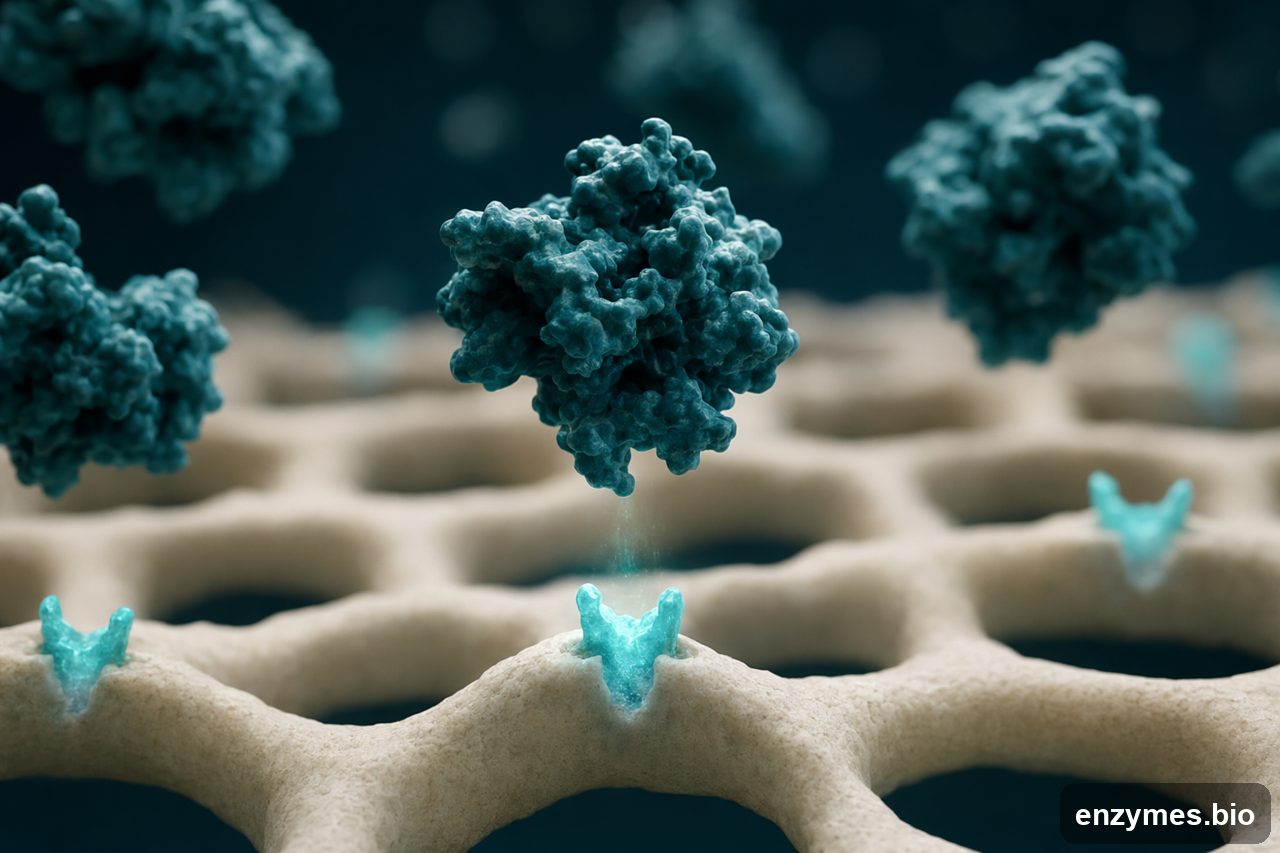
The short faceless explainer on this page visualizes lysozyme activity as a cyan-lit interaction with a porcelain-like peptidoglycan lattice. The wall softens, unzips, and disperses as the NAM–NAG linkages are cleaved. The visual is simplified for clarity, but the sequence reflects the core mechanism: enzyme access, glycosidic bond hydrolysis, wall weakening, and lysis under pressure.
Request Lysozyme pricing or a technical fit review
If you are evaluating Lysozyme for a formulation, process, or procurement program, send the basic application context. Murovia will respond with suitable grade options, documentation availability, lead-time guidance, and commercial pricing.
Prefer a shorter note? Use the same form to ask for get pricing support, sample availability, or a technical suitability check.